The ‘Rofalcon’.
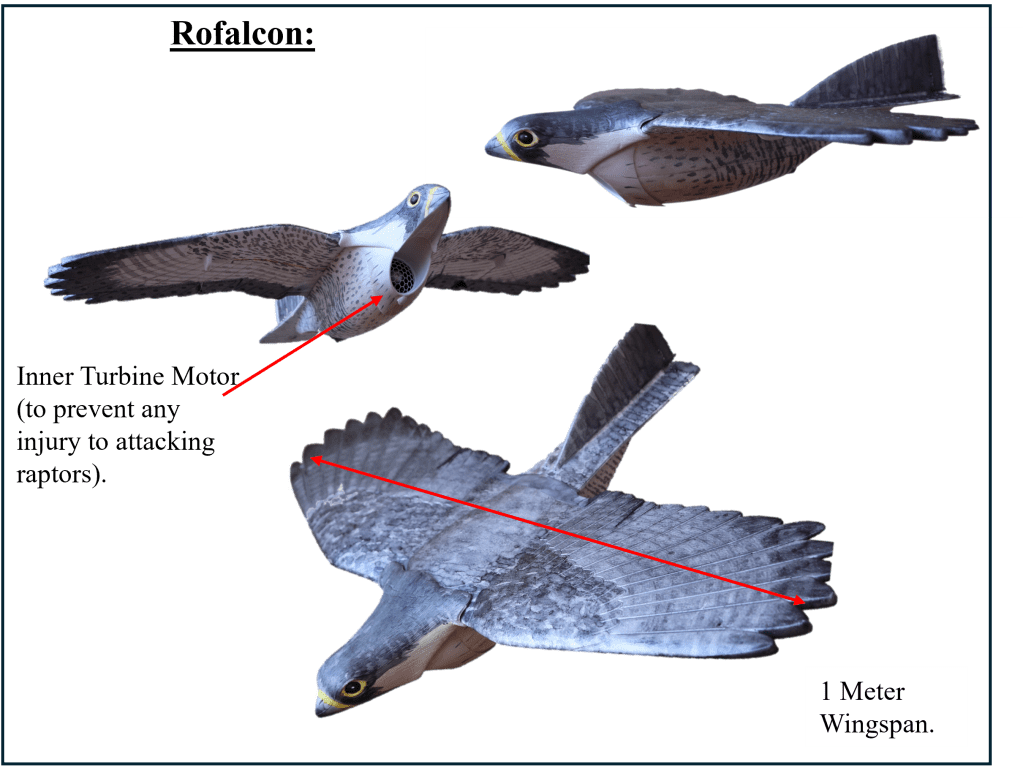
Rofalconry is a relatively new term that describes the use of ‘bird drones’ to aid in training Falcons. Coined by Dr. Nick Fox (a falconer in the UK), Rofalconry has gained popularity in the Northern Hemisphere, and in the last five years, gained attention in the Southern Hemisphere.
Recent work using Rofalcons and other branded bird drones like the RobotFalcon in the Netherlands has been looking into using this technology as a deterrent – with the intention of deterring flocking birds from airport runways. In 2021 a project based in Workum (Netherlands) tested the effectiveness of the RobotFalcon in deterring bird flocks from agricultural fields (1). The study found that the RobotFalcon caused immediate and prolonged flight responses in corvids and gulls (crows and gulls immediately flew away and did not come back or land for some time), outperforming conventional deterrents like drones and kites. Birds remained away significantly longer after RobotFalcon exposure, and habituation was minimal over repeated trials. The authors concluded that realistic predator mimicry using robotic flight is a promising, non-lethal method for reducing bird-related conflicts in open landscapes.
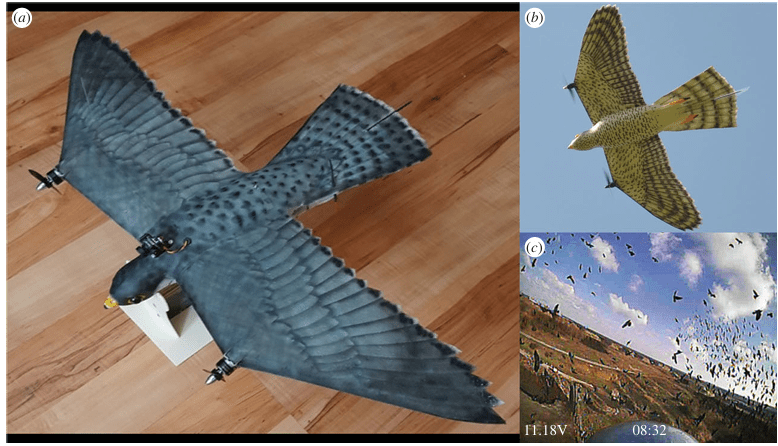
(a) RobotFalcon. (b) RobotFalcon’s underside during flight. (c) RobotFalcon’s view during flight (1). The RobotFalcon and Rofalcon are visually similar. However, Rofalcon has an internal turbine to avoid injuring birds on collision, while the RobotFalcon has external props.
Supplementary Feeding Near Raptor Nests
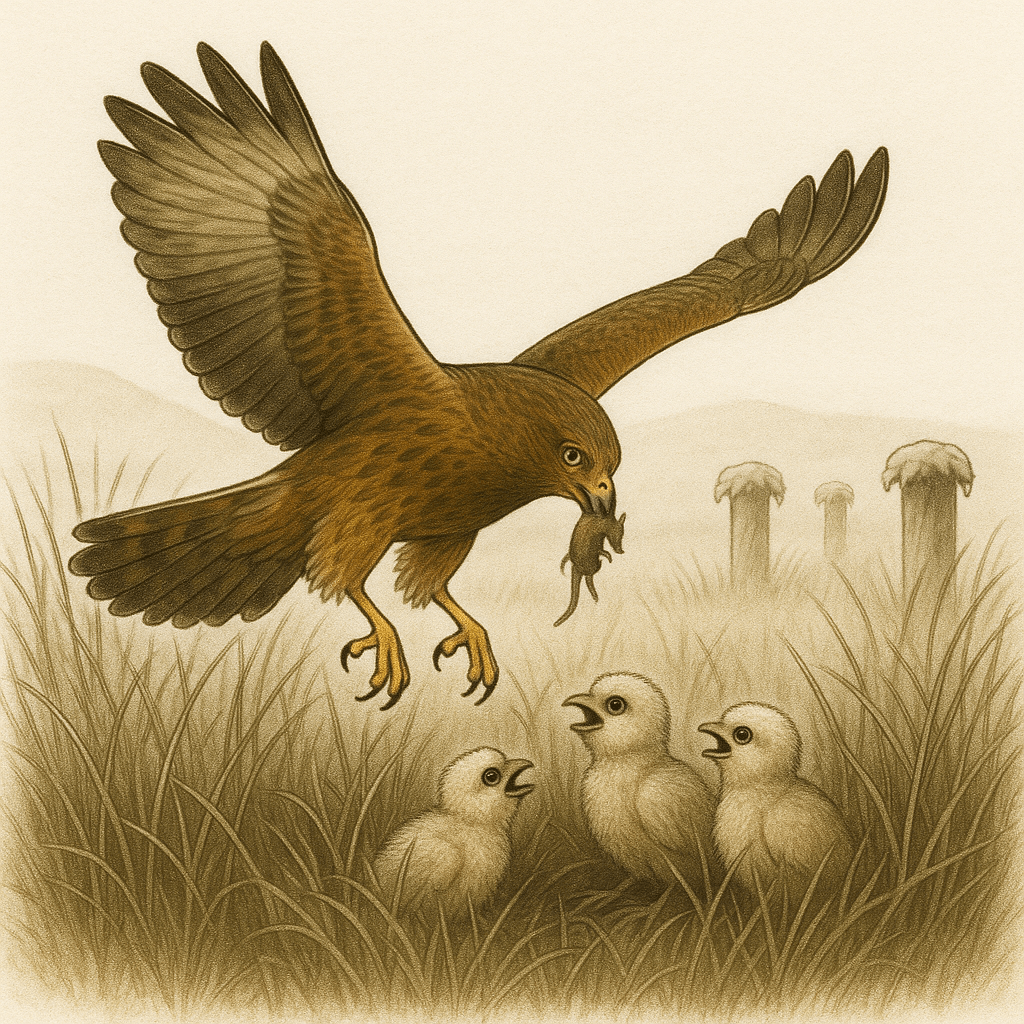
Supplementary feeding (aka Diversionary feeding) has proven to be an effective means of reducing predation pressure by birds of prey (such as Harriers) on vulnerable species. An alternative food source is provided at a distance from the raptor’s nest, redirecting predatory pressure away from vulnerable prey species, without harming these natural predators.
There are two recent and particularly striking examples of supplementary feeding being a highly successful management strategy for problematic, native birds of prey.
For instance, research in 2021 found that providing supplementary food to Red Kites in central England, reduced predation on Northern Lapwing chicks, which more than doubled Lapwing productivity, which is supporting the recovery of the Northern Lapwing population in the area (2).
Similarly, research in 2018 found that providing supplementary feeding to Hen Harriers in the Moors in Scotland significantly reduced the number of wild Red Grouse chicks taken, with diversionary food making up nearly half of the Harrier nestling diets (3).
References:
- Storms, R. F., Carere, C., Musters, R., Van Gasteren, H., Verhulst, S., & Hemelrijk, C. K. (2022). Deterrence of birds with an artificial predator, the RobotFalcon. Journal of the Royal Society Interface, 19(195), 20220497.
- Mason, L. R., Green, R. E., Hirons, G. J. M., Skinner, A. M. J., Peault, S. C., Upcott, E. V., Wells, E., Wilding, D. J., & Smart, J. (2021). Experimental diversionary feeding of red kites Milvus milvus reduces chick predation and enhances breeding productivity of northern lapwings Vanellus vanellus. Journal for Nature Conservation, 64, 126051. https://doi.org/10.1016/j.jnc.2021.126051
- Ludwig, S. C., McCluskie, A., Keane, P., Barlow, C., Francksen, R. M., Bubb, D., Roos, S., Aebischer, N. J., & Baines, D. (2018). Diversionary feeding and nestling diet of Hen Harriers Circus cyaneus. Bird Study, 65(4), 431–443. https://doi.org/10.1080/00063657.2018.1519524
 The Kāhu Project